20+ Years of DUI and Criminal Defense
Built on Trust, Focused on Results
Built on Trust, Focused on Results




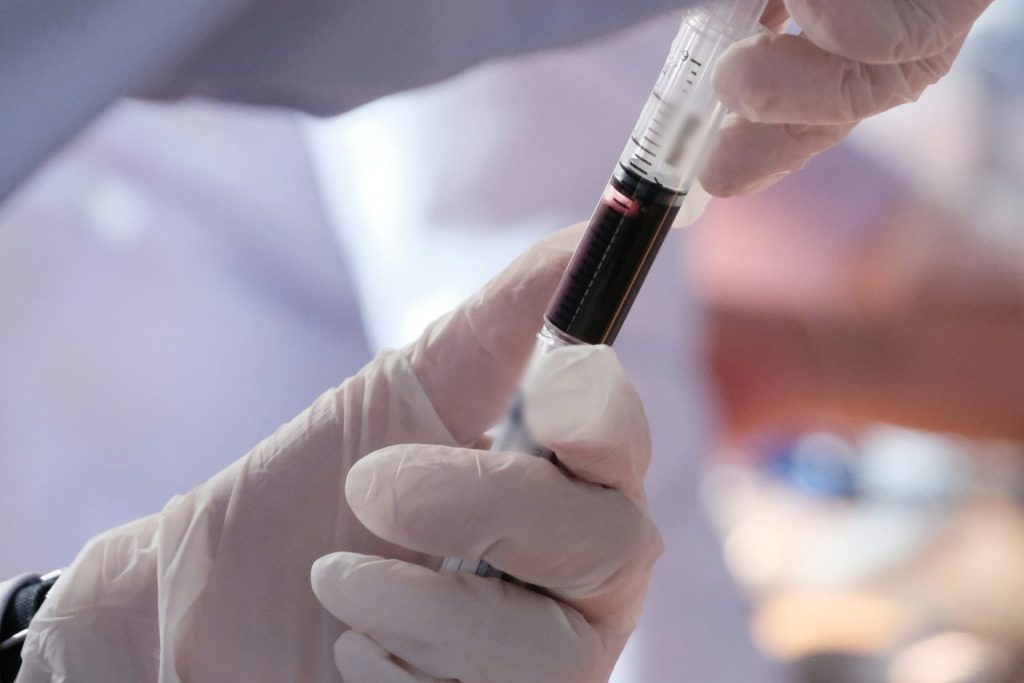
If you took a blood test after a DUI arrest in Colorado, you probably didn’t get a number that night. Blood goes to a lab, and the result can take weeks to arrive. When it does, the next question is: what does this number actually mean for my case?
The answer depends on the number. Colorado law treats a blood alcohol result of .05 or less very differently from .06, .08, or .15, and THC and other drugs have their own rules. This page walks through what each result means in your criminal case, how blood must be drawn and tested, and where blood evidence can be challenged.
For what a .08 result means for your driver’s license, see What Happens to My License if I Blew .08 or Higher.
When an officer suspects alcohol only, Colorado generally lets you choose between a breath test and a blood test. When the officer suspects drugs, alone or with alcohol, the officer can require a blood test. In my experience, drug cases are tested by blood, not urine.
If you refuse, the officer may seek a search warrant, often called a Raider warrant, and draw blood anyway. See DUI Test Refusal in Colorado and my blog post on forced blood draws and Raider warrants.
Colorado law sets out what a jury may conclude from your blood alcohol content (BAC) at the time of driving or within a reasonable time after. These are inferences and presumptions, not automatic convictions, and other evidence still matters.
If your BAC was .05 or less, the law presumes you were not under the influence of alcohol and that your ability to drive was not impaired by alcohol. That presumption favors you. It does not make a case disappear on its own, especially if drugs are also alleged, but it is a strong starting point.
A result above .05 and below .08 allows a jury to infer that your ability to drive was impaired by alcohol, which is DWAI (driving while ability impaired). The jury may also consider it, along with other evidence, on whether you were under the influence. It is a permissible inference, not a requirement: the jury can reject it.
At .08 or more, two things happen. The jury may infer you were under the influence (DUI). Separately, driving with a BAC of .08 or more at the time of driving or within two hours after is its own offense, DUI per se, regardless of how you were driving. See my DUI Per Se in Colorado page.
Two defenses come straight from the statute:
A BAC of .15 or more makes you a persistent drunk driver (PDD) under Colorado law, even on a first offense. That brings required alcohol education and therapy and, after any license revocation, an ignition interlock requirement of at least two years. See Colorado DUI Penalties.
A BAC of .20 or more changes the sentence. On a first-offense DUI, DUI per se, or even DWAI, a result of .20 or more at the time of driving or within two hours after means at least 10 days in jail, up to a year.
That matters because on an ordinary first offense, the 5-day minimum for DUI (2 days for DWAI) can be suspended if you complete an evaluation and the recommended education or treatment. At .20 or more, that escape hatch is gone. The court can still allow alternatives such as work release, so how the sentence is served is often where the work is. A result right around .20 is also a good reason to look hard at the lab work and consider retesting the second tube.
If your blood contained 5 nanograms or more of delta-9 THC per milliliter of whole blood, a jury may infer that you were under the influence of drugs. Like the alcohol inferences, this is permissible, not mandatory, and Colorado has no per se THC limit the way it does for alcohol at .08.
A few things are worth knowing:
For prescription medications and other drugs, Colorado has no numeric inference. A lab report showing a drug in your blood does not by itself show impairment. The prosecution has to connect the drug to how you were actually driving and behaving, usually through officer observations and sometimes a drug recognition expert.
When both are alleged, the prosecution can argue that the combination impaired you, even if neither level alone would. These cases often turn on the details of the lab report and how the evidence fits together.
Colorado’s Board of Health rules (5 CCR 1005-2) set requirements for how DUI blood samples are collected and tested. Among them:
An important caution: a rule violation does not automatically throw out the result. Under Colorado law, the test is excluded only if the violation so undermined the reliability of the result that it shouldn’t be used; otherwise, the violation goes to how much weight the jury gives it. That is why the details matter, and why they need to be developed carefully.
One tube is tested for the prosecution. The lab must keep the remaining blood for at least 12 months from the date it was drawn. If you or your lawyer request it, the second sample must be tested by a state-certified laboratory of your choosing.
In my cases, I can have the second vial independently tested through the lab at Colorado State University in Fort Collins, one of very few labs in Colorado that does this kind of independent testing. A retest can confirm the result, or it can come back different. Either way, it is information worth having before deciding how to handle the case, and it can matter most when the number sits near a line like .05, .08, .15, or .20.
A blood result affects both your criminal case and your driver’s license. With a blood test, the DMV usually sends a letter once results come back, and your deadline to request a hearing runs from that notice, so make sure the DMV has your current address. See Express Consent Hearings in Colorado.
Usually several weeks, sometimes longer, especially for drug testing.
Yes, though a result over .05 and under .08 points to DWAI. The jury may also consider it along with other evidence on DUI.
At .05 or less, the law presumes you were not impaired by alcohol. That is a strong position, but a charge can still be brought if drugs are alleged or other evidence points to impairment.
No. It allows a jury to infer you were under the influence, but it is not an automatic violation, and you can be charged below 5 nanograms.
They can if they get a search warrant. More Colorado agencies are doing that. See my Refusal page.
Yes. The lab keeps the second sample for at least 12 months, and it must be tested by a certified lab on request.
Yes. On a first DUI, DUI per se, or DWAI, a BAC of .20 or more means at least 10 days in jail. The court can still allow alternatives such as work release.
A blood result is evidence, not a verdict. I have defended Colorado DUI cases for more than 20 years, and I personally review the lab report, the draw, and the timeline in every blood case. Call me at 303-355-5148 or contact my office. You’ll speak with me, not an intake team.


