20+ Years of DUI and Criminal Defense
Built on Trust, Focused on Results
Built on Trust, Focused on Results




If you plead not guilty to a qualifying traffic infraction in Denver County Court, your case will generally be scheduled for a Final Hearing rather than a jury trial. This guide explains what a Denver traffic final hearing is, how the hearing works, how to obtain discovery, and what you can expect before appearing in court.
A Denver Traffic Final Hearing is the procedure used to decide many traffic infraction cases after a defendant pleads not guilty. Unlike a criminal traffic offense, which may proceed to a jury trial if authorized by law, a traffic infraction is generally decided by a judge or magistrate at a Final Hearing.
A Final Hearing is often described as an informal version of a trial because many of the formal procedural rules have been relaxed. There is no jury, and the City is generally not represented by a prosecutor. Instead, the police officer who issued the citation appears as the City’s complaining witness and testifies about the facts that led to the citation. The defendant may represent himself or herself, or hire an attorney to appear on their behalf.
Although Final Hearings are less formal than jury trials, they are still court proceedings. Both sides have the opportunity to present evidence, question witnesses, and make legal arguments before the judicial officer decides whether the City has proven the alleged traffic infraction.
One of the biggest differences between a Denver Traffic Final Hearing and a jury trial is who decides the case. At a Final Hearing, the judge or magistrate serves as both the finder of fact and the decision-maker on legal issues. The judicial officer listens to the testimony, evaluates the credibility of the witnesses, considers the evidence, applies the law, and decides whether the City has proven the alleged traffic infraction.
By contrast, in a jury trial, those responsibilities are divided. The jury determines the facts by listening to the evidence, evaluating witness credibility, and deciding whether the prosecution has met its burden of proof. The judge oversees the trial, rules on legal issues and the admissibility of evidence, instructs the jury on the law, and, if there is a conviction, imposes the sentence.
A Denver Traffic Final Hearing is generally scheduled after a defendant pleads not guilty to a qualifying traffic infraction in Denver County Court. Rather than setting the case for a jury trial, the court schedules a Final Hearing before a judge or magistrate, who will decide the case.
Under Denver County Court procedures, a defendant who pleads not guilty to a qualifying traffic infraction has the right to have the Final Hearing scheduled within 91 days of entering the not guilty plea. The court will generally set the hearing date at the time the not guilty plea is entered or shortly thereafter.
Not every Denver traffic case proceeds to a Final Hearing. Generally speaking, Final Hearings apply to traffic infractions, while traffic offenses follow different procedures and may involve additional rights and different types of hearings. If you are unsure whether your citation is a traffic offense or a traffic infraction, see our Denver Traffic Court Rights, Penalties & Procedures guide.
Preparing for a Denver Traffic Final Hearing begins well before your scheduled court date. Because the hearing is your opportunity to present your side of the case, it is generally helpful to organize your evidence, identify any witnesses, and understand the issues that may be presented during the hearing.
Depending on the facts of your case, you may wish to present exhibits such as photographs, diagrams, maps, videos, or other documents that help explain your position. Exhibits should be organized in advance and provided in an acceptable format, such as printed documents or video on a disc.
If other individuals witnessed the incident and their testimony may be important, you should determine whether they will voluntarily appear at the hearing. If not, the court provides a subpoena process that may require a witness to attend. Although subpoenas are available without charge, the responsibility for serving the subpoena rests with the party requesting it.
Finally, it is often helpful to prepare in advance. Consider the questions you intend to ask the police officer during cross-examination, organize the evidence you plan to present, and think about the facts you want the judicial officer to understand before the hearing begins. Careful preparation can help ensure that your evidence is presented in a clear and organized manner.
Discovery in Denver County Court traffic infraction cases differs from discovery in many criminal cases. Unlike a traffic offense that has been set for trial, defendants in traffic infraction cases that are set for a Final Hearing are generally not entitled to pre-hearing discovery.
Instead, once the case has been scheduled for a Final Hearing, the contents of the City’s file are generally made available for inspection on the date of the Final Hearing in accordance with the Denver County Court Local Rules governing traffic infractions. This typically includes the documents the police officer intends to rely upon during the hearing.
From a practical standpoint, many drivers understandably prefer to know the evidence against them before walking into court. Because the officer’s notes and other case materials are generally not available for inspection until the day of the Final Hearing, preparing for cross-examination and anticipating the City’s evidence can be more challenging than in cases where discovery is available in advance.
Because the procedures governing discovery in Denver traffic cases can be confusing, defendants with questions about obtaining case materials may wish to contact the Denver City Attorney’s Office – Prosecution & Code Enforcement Section before their hearing to confirm the current procedures.
Although every case is different, Denver Traffic Final Hearings generally follow the same basic sequence. Understanding the order of the proceedings can help you know what to expect when your case is called.
The hearing typically begins with the police officer presenting the City’s case. The officer testifies under oath and explains the events that led to the traffic citation. If the officer relies on photographs, diagrams, or other exhibits, those items may also be presented during the hearing.
After the officer has finished testifying, the defendant has the opportunity to cross-examine the officer by asking questions about the testimony, observations, or other evidence that has been presented. Cross-examination is an opportunity to clarify the facts, explore inconsistencies, or challenge the weight of the evidence.
Once the City’s presentation has concluded, the defendant may present his or her own case. This may include the defendant’s testimony, photographs, diagrams, documents, or testimony from other witnesses. A defendant also has the right to remain silent and is not required to testify.
After both sides have presented their evidence, each party may have an opportunity to make a closing argument summarizing the evidence and explaining why the judge or magistrate should rule in their favor. The judicial officer will then consider the evidence and issue a decision, either immediately or, in some cases, after taking the matter under advisement.
No. A defendant in a Denver Traffic Final Hearing has the right to remain silent and is not required to testify. If the defendant chooses to testify, the testimony becomes part of the evidence the judge or magistrate will consider in deciding the case. The judicial officer may also ask questions to clarify the testimony.
Whether to testify is a strategic decision that depends on the specific facts and evidence in the case. Because the City bears the burden of proving the alleged traffic infraction, there are situations where the City’s evidence may be insufficient without any testimony from the defendant. In those circumstances, testifying could inadvertently fill gaps in the City’s case or create issues that otherwise would not exist.
On the other hand, there are cases in which the defendant’s testimony may help explain disputed facts, provide important context, or address issues that cannot be established through other evidence alone. The decision to testify should therefore be made only after carefully considering the evidence presented during the hearing and the overall strategy of the case.
If you are represented by an attorney, the decision whether to testify is typically discussed after the City’s evidence has been presented. Experienced traffic defense attorneys often evaluate the officer’s testimony, the strength of the evidence, and the issues that remain in dispute before recommending whether a defendant should take the witness stand.
Yes. A defendant may present evidence at a Denver Traffic Final Hearing to support his or her position. Depending on the facts of the case, this may include photographs, diagrams, maps, documents, videos, or testimony from witnesses. Relevant evidence can often help the judge or magistrate better understand the circumstances surrounding the alleged traffic infraction.
If another person witnessed the incident and has information that may be helpful to your case, that individual may testify at the hearing. If a witness is unwilling to appear voluntarily, the court provides a subpoena process that may require the witness to attend.
As with any court proceeding, it is generally best to organize your exhibits before the hearing and ensure they are available in a format the court can review. Taking the time to prepare your evidence in advance can help the hearing proceed more efficiently.
If the judge or magistrate determines that the City has proven the alleged traffic infraction, the court will enter a judgment of conviction against the defendant. The conviction will generally be for the specific violation that the court finds was proven. For example, if the court finds that the evidence establishes weaving, the defendant will receive a conviction for weaving. Likewise, if the court finds that the defendant was traveling 20–24 mph over the speed limit, the conviction will be for speeding 20–24 mph over the limit, which carries six Colorado DMV points.
In addition to the conviction itself, the court may impose the applicable fine and court costs authorized by law. The conviction will also be reported to the Colorado Division of Motor Vehicles, and the applicable number of DMV points will generally be assessed based on the offense of conviction.
It is also important to understand that, once a defendant elects to proceed to a Final Hearing, plea bargains are generally withdrawn. A defendant should therefore carefully consider any plea offer before requesting a Final Hearing.
Because the consequences of a conviction vary depending on the charge and the driver’s record, it is often helpful to understand the potential penalties before deciding whether to contest a citation or accept a negotiated resolution.
Many defendants choose to represent themselves at a Denver Traffic Final Hearing, and some do so successfully. Whether self-representation is appropriate depends on the facts of the case, the evidence involved, and the issues that may arise during the hearing.
Although Traffic Final Hearings are less formal than jury trials, they are still court proceedings that may involve evidentiary issues, witness testimony, cross-examination, legal arguments, and Colorado DMV point consequences. In some cases, the outcome may also have collateral consequences relating to employment, commercial driver’s licenses (CDLs), or insurance.
Whether to represent yourself is ultimately a personal decision. Before requesting a Final Hearing, it is generally advisable to understand the potential penalties, Colorado DMV point consequences, and the procedural differences between a Final Hearing and other types of court proceedings. Taking the time to understand the process before electing a Final Hearing can help you make a more informed decision about how to proceed.
Every traffic case is different, but many defendants have similar questions about Denver County Court Traffic Final Hearings. Below are answers to some of the most common questions regarding procedure, evidence, witnesses, plea bargains, and what to expect on the day of your hearing.
Not necessarily. While the police officer’s testimony is often an important part of the City’s case, the outcome depends on the specific circumstances. If the officer is unavailable when the case is called, the court may dismiss the citation, continue the hearing to another date, or take other action permitted under the applicable rules and circumstances.
For that reason, defendants should not assume that a traffic citation will automatically be dismissed simply because the officer is not present when court begins. Whether a case proceeds or is dismissed depends on the facts of the particular case and the court’s ruling.
Generally, no. Once a defendant elects to proceed to a Denver County Court Traffic Final Hearing, plea bargains are generally withdrawn. The purpose of the Final Hearing is for the judge or magistrate to decide whether the City has proven the original traffic infraction, not to negotiate a new plea agreement after the evidence has been presented.
For example, if you were originally charged with a 4-point speeding violation and declined a pre-hearing offer to plead to a 2-point defective vehicle charge, you should not expect to receive that same offer after losing the Final Hearing. If the court finds that the City has proven the original speeding charge, the judgment will generally be entered on that charge, along with the corresponding Colorado DMV points and any applicable fines and court costs.
Because plea bargains are generally withdrawn once a Final Hearing is requested, defendants should carefully consider any negotiated resolution before deciding to proceed to a hearing.
A common misconception is that a defendant must prove his or her innocence at a Denver Traffic Final Hearing. Generally speaking, that is not how the process works. The City bears the burden of proving the alleged traffic infraction. A defendant is not required to prove that he or she is innocent.
That said, every case is different. In some situations, the City’s evidence may be insufficient on its own, making it unnecessary for the defendant to present additional testimony or evidence. In other cases, photographs, witness testimony, or the defendant’s own testimony may help explain disputed facts or challenge the City’s evidence. The appropriate strategy depends on the particular facts and the evidence presented during the hearing.
For that reason, defendants should be cautious about assuming there is “no way” they can be found guilty. Even if you believe the officer made a mistake, the judge or magistrate will decide the case based on the evidence and testimony presented during the Final Hearing.
Not necessarily. Every case turns on its own facts and evidence. Simply presenting a repair estimate or invoice does not automatically require the court to dismiss a traffic citation.
For example, the judge or magistrate may consider when the vehicle was inspected, what the mechanic actually found, whether the alleged defect existed at the time of the traffic stop, and how that evidence relates to the specific charge. Depending on the circumstances, additional testimony or other evidence may also be relevant.
The key point is that there is rarely a single document or piece of evidence that automatically results in a dismissal. Instead, the judge or magistrate considers all of the evidence presented during the Final Hearing before deciding whether the City has proven the alleged traffic infraction.
Every case is different. There is no single question or argument that automatically results in a dismissal of a speeding ticket. Whether radar or laser evidence is an issue depends on the facts of the particular case and the evidence presented during the Final Hearing.
Likewise, the fact that you need your driver’s license for work does not, by itself, determine whether you are guilty or not guilty of the alleged traffic infraction. The judge or magistrate decides the case based on the evidence presented during the hearing and whether the City has met its burden of proof.
Although technical issues involving speed measurement equipment may arise in some cases, they are only one part of the overall evidence. The outcome of a Denver Traffic Final Hearing depends on the specific facts, the testimony presented, and the applicable law—not on a single defense or legal argument.
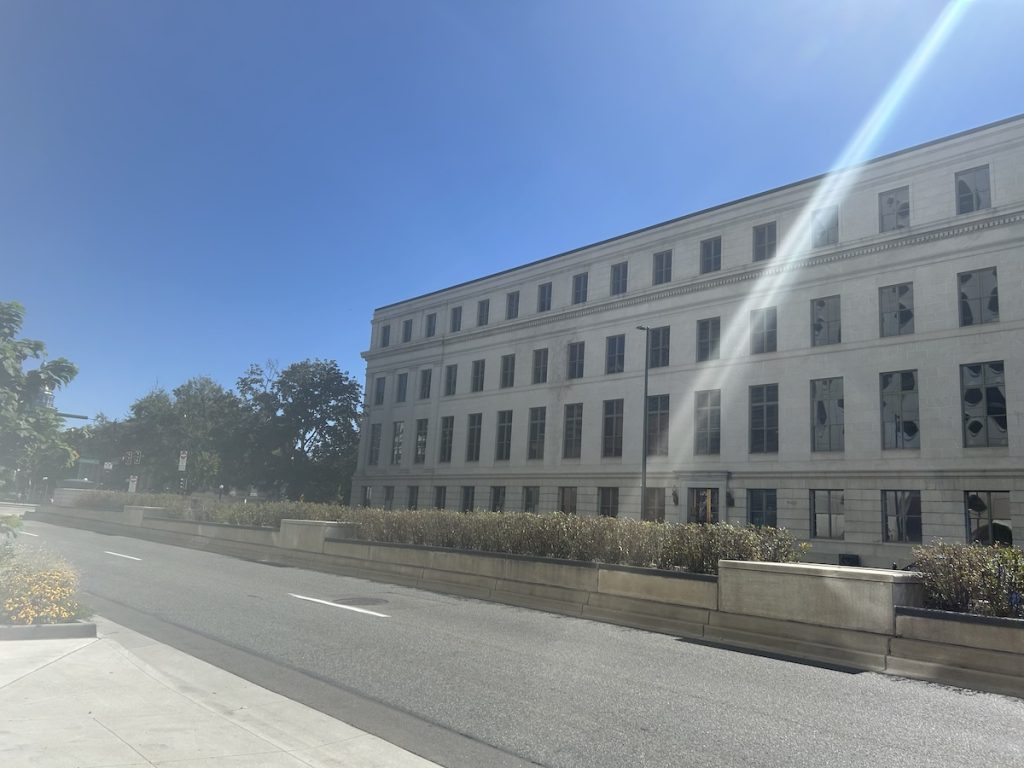
Denver County Court traffic Final Hearings are held at the Denver City and County Building, located at 1437 Bannock Street in downtown Denver. The map below shows the courthouse location.
For additional information about Denver traffic cases, see our Denver Traffic Court Rights, Penalties & Procedures (1437 Bannock Street) guide or visit our Denver Traffic Ticket Lawyer | Denver County Court Defense Attorney page.


