20+ Years of DUI and Criminal Defense
Built on Trust, Focused on Results
Built on Trust, Focused on Results




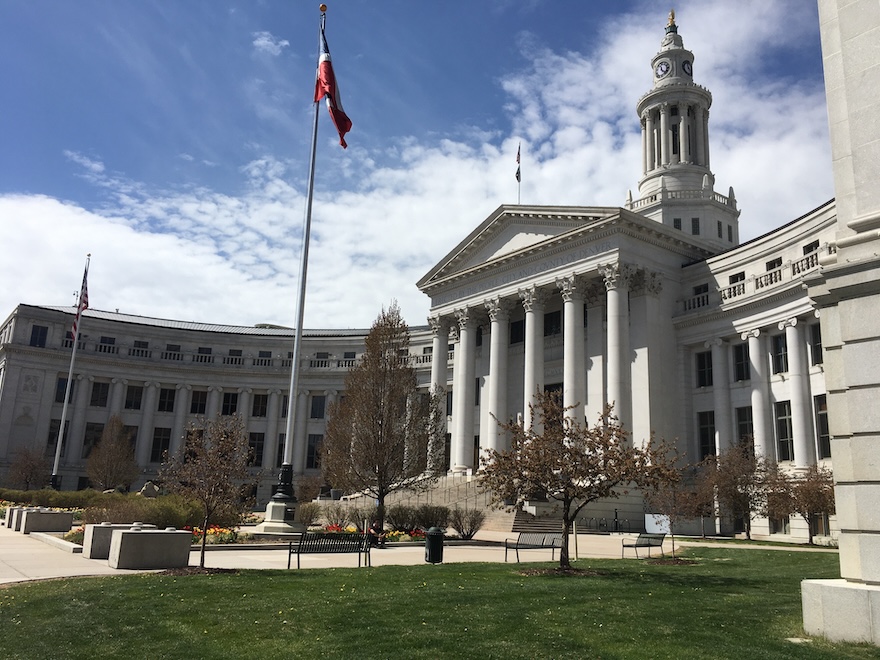
If you got a traffic ticket in Denver, your case is in Denver County Court, and Denver handles traffic cases its own way. Before anything else, two questions decide how your case will go: is your charge a traffic infraction or a criminal traffic offense, and is your case at the City and County Building on Bannock Street or at the Lindsey-Flanigan Courthouse on Colfax?
I’m Monte Robbins. I have defended drivers in Denver County Court for more than 20 years, and I personally handle every case. In many Denver traffic cases, I can appear in court for you, so you don’t have to take time off work or fly back to Colorado. This page explains how Denver traffic court really works, from the plea offer on your ticket to a Final Hearing or trial.
If you were charged with both from the same stop, the whole case is handled as an offense case. If the offense is dismissed and only infractions remain, the infraction rules apply.
A few years ago, Denver changed its traffic plea policy. On a traffic infraction, you can no longer meet with a prosecutor to negotiate. Instead, the plea offer is printed on your ticket. That offer may reduce the points by substituting a different charge, sometimes one that has little to do with what happened. Denver’s own example: a 4-point speeding ticket offered as a 2-point defective vehicle charge, because there is no 2-point speeding charge to plead to.
So your real choice on an infraction is:
That choice matters, because once you elect a Final Hearing, the plea offer is generally withdrawn. If you lose, the judgment enters on the original charge with its full points. You can’t go back and ask for the offer you turned down.
A Final Hearing is a short trial before a judge or magistrate, set within 91 days of your not-guilty plea. A few things surprise most people:
If the court finds the charge proven, it enters judgment on whatever it finds, for example speeding 20 to 24 mph over (6 points), along with the fine and costs.
In practice, if you are set for an arraignment in Denver traffic court, at least one of your charges is a criminal traffic offense. At the arraignment, the court goes over the advisement of rights, and you can meet with the prosecutor and/or set the case for trial.
From Denver’s current advisement of rights:
The jury demand and fee deadline is easy to miss on your own. It is one of the first things I watch for in an offense case.
Denver Municipal Code charges at 1437 Bannock Street, from the City’s advisement form:
| Traffic offense | Traffic infraction | |
|---|---|---|
| Jail | Up to 2 years per charge | None |
| Fine | Up to $5,000 per charge | Up to $999 per charge |
| Court costs | Up to $26 | Up to $26 |
| DMV points | May be assessed | May be assessed |
| Surcharges | Victim assistance, law enforcement, and other statutory fees | Same |
| If you miss court | An arrest warrant may issue, and an outstanding judgment warrant can hold your license | A default judgment enters, an outstanding judgment warrant issues against your license, and the DMV assesses the points |
Colorado state traffic charges at 520 W. Colfax:
In any case involving property damage or injury, the court can also order restitution to the other driver for medical bills, lost wages, repairs, and deductibles.
These are maximums, not the expected outcome. For many drivers, the points matter more than the fine, because they can lead to a suspension, higher insurance, and trouble for commercial drivers.
Denver traffic cases are heard in two buildings, and your summons says which. Going to the wrong one can cost you your court date.
Most tickets written under the Denver Municipal Code: routine infractions, Final Hearings, and municipal traffic offenses. In many Bannock Street cases, I can appear for you.
The bigger cases, charged under Colorado state law and prosecuted by the Denver District Attorney’s Office:
Any infractions filed with those charges are heard there too. At Colfax, the court generally expects you to appear in person. In some cases I can ask for permission to appear virtually or appear for you at certain hearings, but you shouldn’t assume your appearance will be waived.
If a detective from the Denver Police Department’s Traffic Investigations Unit sends you a letter asking you to call, give a statement, or bring your car in for inspection, they’re not inviting you over for coffee. You are the subject of a criminal investigation, usually a hit and run. Talk to a lawyer before you talk to the detective or agree to an inspection.
Colorado assigns points by how far over the limit you were:
| Over the limit | Points |
|---|---|
| 5–9 mph | 1 |
| 10–19 mph | 4 |
| 20–39 mph | 6 |
| 40 mph or more | 12 |
At 25 mph or more over, speeding becomes a criminal traffic offense. School zone and construction zone tickets carry enhanced penalties.
For speeding 20 mph or more over the limit, or over Colorado’s 75 mph maximum, the DMV now adds points for repeat violations:
| Qualifying speeding history | Added points |
|---|---|
| Second qualifying violation within 12 months | +2 |
| Third or later within 24 months | +4 |
| Fifth or later within 5 years | +8 |
Driving 100 mph or more adds another 4 points. That means the points printed on the ticket may not be your real exposure, so your prior record has to be part of any decision about an offer.
Officers measure speed by radar, lidar, pacing, or visual estimate, and each raises different questions. When the case is a criminal offense with discovery, I review:
Small inconsistencies between the video, the report, and the notes can matter in negotiations or at trial. Missing body-worn camera footage can be an issue in itself. See Colorado Body-Worn Camera Evidence, Radar and the Walker Case, and my Colorado Speeding Ticket Lawyer guide. Ticketed for crossing the painted gore area? See Denver Gore Violation Ticket.
On many Bannock Street cases, yes, including many municipal criminal traffic cases. That helps busy professionals, commercial drivers, and anyone who lives outside Denver or outside Colorado. Colfax cases generally require you to be there, though a virtual appearance is sometimes possible. Either way, I’ll tell you well in advance when you need to appear.
Much of the work can be handled by phone, email, and electronic signatures, and I offer flat fees in many Denver traffic cases.
For a CDL holder, the right strategy often differs from a regular driver’s. A conviction can affect your commercial driving privileges and your job, even for a ticket in your personal vehicle. See my Colorado CDL Traffic Lawyer page.
Not on an infraction. Denver’s offer is printed on the ticket, and your choice is to accept it or contest the ticket at a Final Hearing. On a criminal traffic offense, you can meet with the prosecutor at arraignment.
Generally no. Once you elect a Final Hearing, the offer is withdrawn, and a loss means judgment on the original charge and its points.
Paying is usually a guilty plea, with a conviction and any points that come with it. Sometimes that’s the right choice, but check what it means for your record, insurance, and job first.
Not automatically. The court may dismiss it, but it may also continue the hearing.
Only for a traffic offense. Infractions carry no jail.
On an infraction, a default judgment enters, a judgment warrant holds your license, and the DMV assesses the points. On an offense, a warrant for your arrest may issue. Act quickly; there may be a way to fix it.
Generally yes. Colfax handles the more serious state charges, and the court expects you there. In some cases a virtual appearance can be requested.
Often, yes. In many Bannock Street cases I can appear for you, and much of the work is done remotely.
I offer flat fees in many Denver traffic cases, quoted up front at your free consultation.
The best time to call is before you accept the offer or request a Final Hearing, because that decision is hard to undo. Call me at 303-355-5148 or contact my office for a free consultation. You’ll speak with me, not an intake team.


