20+ Years of DUI and Criminal Defense
Built on Trust, Focused on Results
Built on Trust, Focused on Results




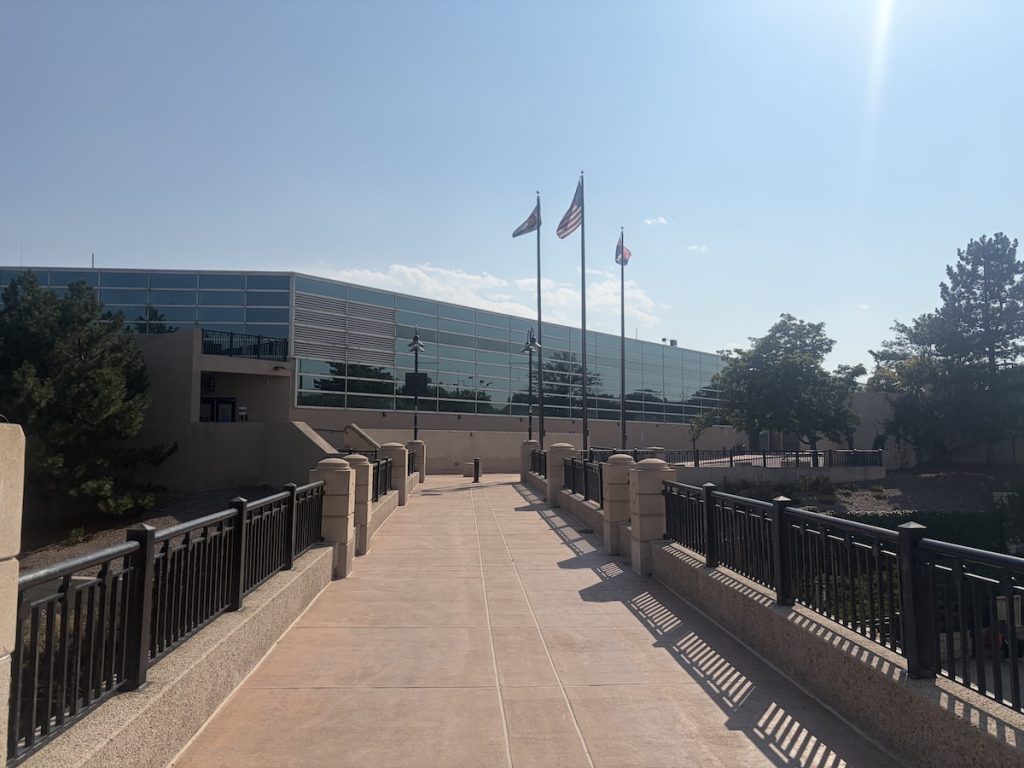
A traffic ticket filed in Lakewood Municipal Court may involve more than simply paying a fine. Depending on the charge, a conviction may result in points against your Colorado driver’s license, increased insurance premiums, court-ordered conditions, and—in some cases—the possibility of a jail sentence.
Lakewood Municipal Court is a court of record with jurisdiction over alleged violations of the Lakewood Municipal Code, including municipal traffic offenses occurring within the City of Lakewood. The Court hears a wide variety of traffic cases, ranging from speeding tickets to more serious allegations such as reckless driving, careless driving, speed contests, no proof of insurance, and other municipal traffic offenses.
Every case is unique. Depending on the facts, there may be opportunities to negotiate with the prosecutor, seek a reduction in charges, minimize points, or prepare the case for trial when appropriate. An experienced Lakewood Municipal Court traffic lawyer can evaluate the evidence, explain your options, and work toward the best possible outcome.
Lakewood Municipal Court hears a broad range of municipal traffic offenses. Depending on the charge, a case may be classified as either a criminal traffic offense or a noncriminal traffic matter. Certain violations carry the possibility of criminal penalties, including speeding 25 miles per hour or more over the applicable speed limit, reckless driving, careless driving, speed contests, and no proof of compulsory insurance.
Common traffic offenses handled in Lakewood Municipal Court include:
Reckless driving is one of the more serious traffic offenses prosecuted in Lakewood Municipal Court. Under the Lakewood Municipal Code, reckless driving occurs when a person operates a motor vehicle in a manner demonstrating a willful or wanton disregard for the safety of persons or property. Reckless driving is classified as a Class 2 traffic offense.
Allegations of reckless driving often arise from excessive speed, aggressive driving, racing behavior, or other conduct that law enforcement believes created a substantial risk to others. Because a conviction may carry significant consequences, including points against your driver’s license and the possibility of jail, it is important to carefully evaluate the evidence, police reports, witness statements, and any available video before deciding how to proceed.
Depending on the facts of the case, it may be possible to negotiate a reduction of the charge, challenge the evidence, or prepare the matter for trial.
Careless driving is one of the most frequently charged criminal traffic offenses in Lakewood Municipal Court. Under the Lakewood Municipal Code, a person commits careless driving by operating a motor vehicle in a careless and imprudent manner, without due regard for the width, grade, curves, corners, traffic, use of the streets and highways, and all other attendant circumstances. Careless driving is classified as a Class 2 traffic offense.
Careless driving cases arise under a wide variety of circumstances. Some involve a traffic stop where no collision occurred, while others stem from motor vehicle accidents involving property damage or personal injury. Depending on the facts of the case, the prosecution may rely on witness statements, photographs, body-worn camera footage, dash camera video, accident reconstruction evidence, or other evidence in an attempt to prove that the driver’s conduct was careless under the circumstances.
Because every accident is different, it is important to carefully evaluate the evidence before deciding how to proceed. An experienced Lakewood Municipal Court traffic lawyer can review the police reports, witness statements, photographs, and available video, identify potential defenses, and work to obtain the best possible outcome.
Speeding tickets in Lakewood Municipal Court range from relatively minor violations to more serious criminal traffic offenses. Under the Lakewood Municipal Code, exceeding the applicable speed limit by 1 to 24 miles per hour is generally classified as a Class 3 traffic offense, while 25 miles per hour or more over the applicable speed limit is classified as a Class 2 traffic offense.
In addition to posted speed limits, Lakewood’s Municipal Code requires drivers to operate their vehicles at a speed that is reasonable and prudent under the existing conditions. Depending on the circumstances, factors such as traffic, weather, road conditions, and other hazards may become relevant in determining whether a speed was lawful.
Lakewood also utilizes an Automated Vehicle Identification System (AVIS) in certain circumstances. Under the Municipal Code, when evidence obtained in whole or in part through an AVIS indicates that a vehicle was traveling 25 miles per hour or more above the posted speed limit, the matter may be investigated as a criminal traffic offense and referred to sworn police personnel for further investigation.
Whether a speeding case involves an officer’s observations, radar or lidar evidence, pacing, or an AVIS investigation, an experienced Lakewood Municipal Court traffic lawyer can evaluate the evidence, identify potential defenses, and work toward the best possible resolution.
Lakewood Municipal Court has jurisdiction over allegations of both speed contests and speed exhibitions, which are classified as Class 2 traffic offenses under the Lakewood Municipal Code. Unlike an ordinary speeding ticket, these charges involve allegations of racing or displaying a vehicle’s speed or power, rather than simply exceeding the posted speed limit.
Under the Municipal Code, a speed contest generally involves operating one or more motor vehicles to conduct a race or time trial, including conduct such as rapid acceleration, excessive speed, vying for position, or changing lanes in an attempt to gain an advantage over another participant. A speed exhibition involves operating a motor vehicle to display its speed or power and may include conduct such as tire squealing, rapid acceleration, rapid swerving or weaving through traffic, producing tire smoke, or leaving visible tire marks on the roadway.
These cases often depend upon the specific observations of law enforcement, witness statements, video evidence, and the surrounding circumstances. An experienced Lakewood Municipal Court traffic lawyer can carefully review the evidence, evaluate potential defenses, and work toward the best possible outcome.
Colorado law requires drivers to yield the right-of-way to authorized emergency vehicles displaying the appropriate audible or visual signals. The Lakewood Municipal Code also requires drivers to exercise due care when approaching stationary emergency vehicles, tow trucks, public utility service vehicles, and certain maintenance or construction vehicles. Depending on the circumstances, motorists may be required to move over into an adjacent lane when it is safe to do so or reduce their speed and proceed with due care and caution.
Importantly, under the Lakewood Municipal Code, a violation of these move-over requirements is charged as careless driving. As a result, a citation for failing to yield to an emergency vehicle or other protected roadside vehicle may carry more significant consequences than many drivers realize.
An experienced Lakewood Municipal Court traffic lawyer can review the facts of the case, evaluate the available evidence, and determine whether the prosecution can establish that a violation occurred under the circumstances.
Practice Tip: In my experience, law enforcement agencies throughout Colorado have placed increased emphasis on enforcing the state’s move-over laws in recent years. Many drivers are surprised to learn that failing to yield to an emergency vehicle or other protected roadside vehicle may be charged as careless driving. Prosecutors often take these cases seriously because they are intended to protect first responders and other roadside workers performing their duties.
A charge of No Proof of Compulsory Insurance in Lakewood Municipal Court does not necessarily mean that you were uninsured at the time of the traffic stop. In many cases, the issue is whether proof of insurance can be timely provided to the prosecutor or the Court.
According to Lakewood Municipal Court’s published procedures, if you were insured on the date of the alleged violation, you should provide proof of insurance to the Prosecutor’s Office at least two weeks before your court date. Unless you receive notice that the charge has been dismissed, however, you are still required to appear in court as scheduled.
If you obtained insurance after the date of the alleged violation, different procedures may apply. The Court also requires specific information to verify coverage, including a copy of your insurance card or policy, your insurance agent’s contact information, the citation number, and your identifying information. In addition, you may need to authorize your insurance company to release policy information to the Prosecutor’s Office for verification.
An experienced Lakewood Municipal Court traffic lawyer can help determine whether the prosecutor has sufficient proof of insurance, assist with the submission of supporting documentation, and evaluate whether the charge may be resolved before trial.
Failure to stop for a school bus is a serious traffic offense prosecuted in Lakewood Municipal Court. Under the Lakewood Municipal Code, motorists are generally required to stop at least 20 feet before reaching a stopped school bus that has activated its required visual warning signals and may not proceed until those signals are no longer displayed. The ordinance also addresses situations involving school buses that are not required to use visual warning signals and highways with separate roadways. Because a violation is classified as a Class 2 traffic offense, it is a criminal traffic offense.
These cases often depend on the specific facts and circumstances, including the type of roadway, whether the school bus was displaying the required warning signals, the location of the vehicle, and witness observations. In some cases, citations may be issued based on information provided by the school bus driver.
An experienced Lakewood Municipal Court traffic lawyer can review the evidence, evaluate whether the ordinance applies under the particular circumstances, and work toward the best possible outcome.
Eluding or attempting to elude a police officer is among the most serious traffic offenses prosecuted in Lakewood Municipal Court. Under the Lakewood Municipal Code, a person commits this offense by willfully attempting to evade or elude a police officer after receiving a visual or audible signal from an officer operating a marked law enforcement vehicle directing the driver to stop.
These cases often involve allegations that a driver accelerated, failed to stop, or otherwise attempted to avoid law enforcement after being signaled to pull over. The specific facts and circumstances—including the officer’s observations, body-worn camera footage, dash camera video, and witness statements—may play an important role in determining whether the prosecution can prove the charge.
Because an eluding allegation can carry significant criminal consequences, it is important to carefully review the evidence and evaluate all available defenses before deciding how to proceed. An experienced Lakewood Municipal Court traffic lawyer can assess the facts of the case, challenge the prosecution’s evidence where appropriate, and work toward the best possible outcome.
Lakewood Municipal Court has jurisdiction over certain commercial vehicle violations prosecuted under the Lakewood Municipal Code. The Code adopts the safety rules and regulations of the Colorado Department of Public Safety governing the operation of commercial vehicles and requires commercial vehicles operating on public highways to comply with those standards.
The Municipal Code defines a commercial vehicle to include certain vehicles used in commerce meeting specified weight requirements, vehicles designed to transport 16 or more passengers, and certain tow vehicles used in commerce. A violation of the applicable commercial vehicle safety requirements is classified as a Class 2 traffic offense, making it a criminal traffic offense.
Commercial vehicle cases often involve technical regulatory requirements and may have consequences beyond the municipal court proceeding. An experienced Lakewood Municipal Court traffic lawyer can review the allegations, evaluate the applicable regulations, and work toward the best possible resolution.
In addition to representing drivers charged with commercial vehicle safety violations, I also represent commercial driver’s license (CDL) holders and other commercial drivers charged with a wide range of traffic offenses prosecuted in Lakewood Municipal Court, including speeding, reckless driving, careless driving, no proof of insurance, and other municipal traffic violations. Because traffic convictions may have significant consequences for a commercial driver’s livelihood, it is important to carefully evaluate the evidence and pursue the best possible resolution.
If you have been charged with a traffic offense in Lakewood Municipal Court, you have important constitutional and procedural rights. Depending on the circumstances of your case, these rights include the right to be represented by an attorney, the right to remain silent, the right to a full explanation of the charges, the presumption of innocence, the right to present witnesses and cross-examine prosecution witnesses, and the right to testify or not testify on your own behalf. Eligible defendants also have the right to a trial before the court or, in certain cases, a jury trial.
Understanding and exercising these rights can have a significant impact on the outcome of your case. An experienced Lakewood Municipal Court traffic lawyer can explain your legal options, protect your rights throughout the proceedings, and work toward the best possible resolution.
If your case cannot be resolved through negotiation, you may choose to proceed to trial. At trial, the prosecution bears the burden of proving every element of the charged offense beyond a reasonable doubt. Defendants also have the right to subpoena witnesses to testify on their behalf. According to Lakewood Municipal Court’s published procedures, requests for subpoenas should generally be made at least two weeks before the scheduled trial date.
Lakewood Municipal Court provides for both court trials and, in eligible cases, jury trials. All violations may be tried to the court, while adult penal violations and Class 2 traffic offenses may be eligible for a jury trial. Under the Court’s published procedures, a formal jury demand and the applicable jury fee must generally be filed within 21 days after entering a not guilty plea.
Whether your case is resolved through negotiation or proceeds to trial, careful preparation is essential. An experienced Lakewood Municipal Court traffic lawyer can evaluate the evidence, identify potential defenses, prepare witnesses, and advocate on your behalf throughout the proceedings.
Lakewood Municipal Court is a court of record, meaning that court proceedings are officially recorded and preserved. Unlike proceedings in non-record courts, a record of the hearing is available if a case is appealed. Being a court of record also means that trials are conducted under formal rules and procedures established by law.
No. Some traffic violations are noncriminal, while others carry criminal penalties. Lakewood specifically identifies offenses such as reckless driving, careless driving, speed contests, no proof of insurance, and speeding 25 miles per hour or more over the limit as traffic violations that may be handled through the criminal court process.
Certain cases are eligible for a jury trial, including adult penal violations and Class 2 traffic offenses. Lakewood Municipal Court states that a formal jury demand and the applicable jury fee must generally be filed within 21 days after entering a not guilty plea.
If you were insured on the date of the alleged violation, Lakewood’s published procedures allow you to provide proof to the Prosecutor’s Office before your court date. The Court states that proof should be submitted at least two weeks in advance, and you should still appear unless you are notified that the case has been dismissed
Yes. Under the Lakewood Municipal Code, speeding 25 miles per hour or more over the applicable limit is classified as a Class 2 traffic offense. Lakewood also provides that an AVIS-based allegation of 25 miles per hour or more over the posted limit may be referred for investigation as a traffic offense.
Yes. Under the Lakewood Municipal Code, certain violations involving stationary emergency vehicles, tow trucks, utility vehicles, and maintenance or construction vehicles are treated as careless driving.
Depending on the case, you may have the right to an attorney, the right to remain silent, the right to present and subpoena witnesses, the right to cross-examine prosecution witnesses, and the right to a trial before the court or jury if eligible.
Not every traffic case requires the same level of representation, but criminal traffic offenses and cases involving significant points, possible jail, accidents, or CDL consequences deserve careful review. An attorney can obtain and evaluate the discovery, identify potential defenses, negotiate with the prosecutor, and prepare the case for trial when appropriate.
Traffic cases prosecuted in Lakewood Municipal Court can involve much more than simply paying a fine. Depending on the charge, a conviction may result in points against your Colorado driver’s license, increased insurance premiums, substantial fines, and, in some cases, a criminal record or jail sentence.
Every case deserves a careful review of the evidence. As part of my representation, I obtain and carefully evaluate the available discovery, including police reports, witness statements, body-worn camera (BWC) video, dash camera video, audio recordings, photographs, and other documentary evidence. A thorough review of the evidence is often essential in identifying potential defenses, evaluating the prosecution’s case, negotiating with the prosecutor, or preparing the case for trial.
Practice Tip: One of the most important steps in reviewing any traffic case is dismantling the prosecution’s evidence piece by piece—especially the body-worn camera (BWC) footage. In every case, I ask the same fundamental question: Can the prosecution actually prove each element of the offense beyond a reasonable doubt? That answer often isn’t apparent from the citation itself, which is why a careful review of the discovery is so important.
As a Colorado traffic defense attorney, I personally handle every case from start to finish. I work directly with my clients, review the evidence, communicate with the prosecutor, and appear in court on my clients’ behalf whenever possible. My goal is to provide practical advice, responsive communication, and effective representation tailored to the unique facts of each case.
If you have been charged with a traffic offense in Lakewood Municipal Court, I would be happy to discuss your case, explain the court process, and help you determine the best path forward.
If you have been charged with a traffic offense in Lakewood Municipal Court, don’t wait until your court date to learn about your options. Early intervention may provide opportunities to preserve evidence, obtain discovery, negotiate with the prosecutor, or prepare an effective defense.
Whether you are facing a speeding ticket, reckless driving, careless driving, no proof of compulsory insurance, eluding, a speed contest allegation, or another municipal traffic offense, I am available to review your case and discuss the available options.
Contact The Law Office of Monte J. Robbins, Esq. today to schedule a consultation and learn how I may be able to assist with your Lakewood Municipal Court traffic case.
If you are scheduled to appear in Lakewood Municipal Court, the courthouse is located at 445 S. Allison Parkway in Lakewood, Colorado. A map of the courthouse location is provided below for your convenience.
If your traffic case is pending in Jefferson County Court rather than Lakewood Municipal Court, be sure to visit our Jefferson County Traffic Lawyer page. Jefferson County Court handles state traffic cases prosecuted under Colorado law, while Lakewood Municipal Court hears alleged violations of the Lakewood Municipal Code. Understanding which court has jurisdiction over your case is an important first step in evaluating your legal options.
I also represent clients in Jefferson County Court on a wide range of traffic matters, including speeding, reckless driving, careless driving, DUI, driving under restraint, habitual traffic offender cases, hit-and-run, and other misdemeanor and criminal traffic offenses.


