20+ Years of DUI and Criminal Defense
Built on Trust, Focused on Results
Built on Trust, Focused on Results




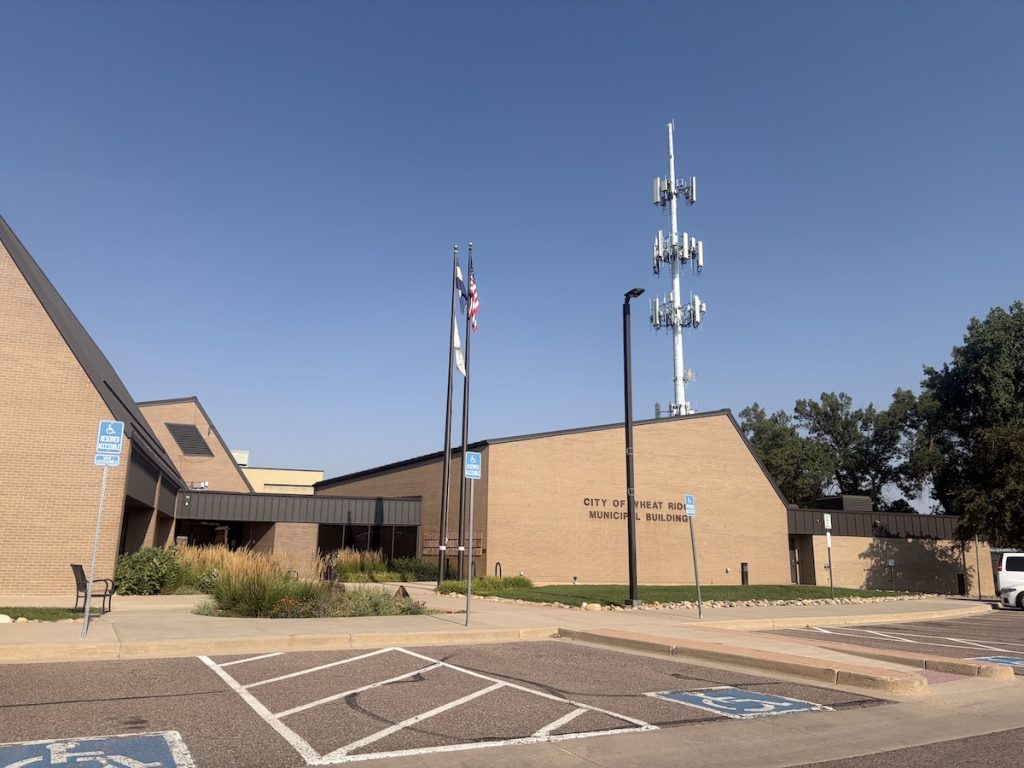
A traffic ticket filed in Wheat Ridge Municipal Court can involve more than simply paying a fine. Depending on the charge, a conviction may result in points against your Colorado driver’s license, increased insurance costs, substantial fines, and, in criminal traffic cases, the possibility of a jail sentence.
Wheat Ridge has adopted the 2024 Model Traffic Code for Colorado, subject to specific amendments contained in the Wheat Ridge City Code. Traffic cases prosecuted in Wheat Ridge Municipal Court range from noncriminal traffic infractions to criminal traffic offenses, including serious charges such as reckless driving, careless driving, speed contests, eluding, and speeding 25 miles per hour or more over the applicable speed limit.
Traffic violations prosecuted in Wheat Ridge Municipal Court are classified as either noncriminal traffic infractions or criminal traffic offenses. Under Wheat Ridge’s amendments to the Model Traffic Code, traffic violations are generally treated as civil traffic infractions unless specifically designated as criminal traffic offenses. There is no right to a jury trial for a noncriminal traffic infraction.
Wheat Ridge specifically classifies the following violations as criminal traffic offenses:
Because careless driving is itself classified as a criminal traffic offense in Wheat Ridge, that classification may encompass a variety of driving conduct charged as careless driving. For example, the Model Traffic Code specifically addresses careless driving involving injury or death, careless driving causing serious bodily injury to a vulnerable road user, and unnecessarily crowding or threatening a bicyclist. Section 1008.5 expressly provides that driving unnecessarily close to, toward, or near a bicyclist in a careless and imprudent manner constitutes careless driving under § 1402.
The distinction between an infraction and a criminal traffic offense is significant. A traffic infraction in Wheat Ridge is subject to a maximum fine of $2,650, plus authorized court costs. A criminal traffic offense may carry up to one year in jail, a fine of up to $2,650, or both, in addition to court costs
A traffic case filed in Wheat Ridge Municipal Court carries important procedural rights. At arraignment, a defendant appearing without an attorney must be advised of the nature of the charges and the maximum penalty that may be imposed upon conviction.
Depending on the nature of the case, those rights include:
A defendant may also request that the arraignment be continued for good cause, including to obtain the assistance of an attorney or to determine what plea to enter.
Attorney Note: Simply paying a traffic ticket may amount to an admission or acknowledgment of the violation and can result in a conviction being entered. Before paying a Wheat Ridge traffic ticket, it may be worthwhile to understand the classification of the charge, the potential driver’s license points, and whether defenses or negotiated resolutions may be available.
A defendant charged with a qualifying criminal traffic offense in Wheat Ridge Municipal Court may have the right to a jury trial. To preserve that right, Colorado Municipal Court Rule 223 generally requires the defendant to file a written jury demand within 21 days after arraignment or entry of a plea and tender a $25 jury fee, unless the fee is waived because of indigence. Failure to timely file the written jury demand waives the right to a jury trial.
Under the Wheat Ridge Municipal Code, a municipal court jury consists of three jurors unless the defendant requests a greater number, not to exceed six, in the written jury demand. Criminal cases in which the defendant does not perfect the right to a jury trial, as well as civil traffic matters, are tried to the municipal judge.
Practice Tip: The deadline for requesting a jury trial in municipal court can arrive quickly. If a traffic charge carries a right to a jury trial, waiting until a later court appearance to request one may result in that right being waived.
Wheat Ridge Municipal Court handles a wide range of traffic violations occurring within the City’s jurisdiction. Wheat Ridge has adopted the Model Traffic Code with local amendments, and certain provisions—including reckless driving, careless driving, failure to show compulsory insurance, and eluding—apply not only on public streets and highways but throughout the City.
Wheat Ridge has established a maximum lawful speed of 25 miles per hour on streets within the City unless otherwise posted. Unlike a prima facie speed limit that may depend upon surrounding circumstances, Wheat Ridge’s ordinance expressly provides that its specified speed limits are maximum lawful speed limits.
Most speeding violations are treated as noncriminal traffic infractions. However, Wheat Ridge specifically classifies speeding 25 miles per hour or more over the lawful speed limit as a criminal traffic offense.
The evidence in a speeding case may include radar or lidar measurements, officer observations, dash-camera or body-worn camera video, roadway signage, and other circumstances surrounding the alleged violation. A speeding citation should be reviewed carefully before simply paying the ticket, particularly when the alleged speed places the charge within Wheat Ridge’s criminal classification.
Colorado’s Model Traffic Code distinguishes between a speed contest and a speed exhibition, and Wheat Ridge specifically designates violations of § 1105 as criminal traffic offenses.
A speed contest includes operating one or more vehicles to conduct a race or time trial and may involve rapid acceleration, exceeding reasonable and prudent speeds, vying for position, or making lane changes to gain an advantage over another participant. A speed exhibition involves displaying a vehicle’s speed or power and may include rapid acceleration, squealing tires, rapid swerving or weaving, producing tire smoke, or leaving visible acceleration marks on the roadway.
These cases are highly fact-specific. Conduct that an officer characterizes as racing or a speed exhibition should be compared carefully with the statutory elements and the available video and other evidence.
Reckless driving requires driving in a manner demonstrating a wanton or willful disregard for the safety of persons or property. Wheat Ridge classifies reckless driving as a criminal traffic offense.
Whether particular driving conduct rises to the level of reckless driving depends upon the evidence and circumstances of the case. Speed, traffic conditions, roadway configuration, surrounding vehicles, officer observations, and available video evidence may all be important when evaluating the charge.
Careless driving involves operating a vehicle in a careless and imprudent manner without due regard for the roadway, traffic, and other attendant circumstances. Wheat Ridge specifically classifies careless driving as a criminal traffic offense.
The consequences of careless driving can become substantially more serious when an accident results in injury. Under the Model Traffic Code, if the driver’s actions are the proximate cause of bodily injury to another person, the offense is classified as a class 1 misdemeanor traffic offense. The Model Traffic Code likewise classifies careless driving that is the proximate cause of another person’s death as a class 1 misdemeanor traffic offense.
Careless driving is frequently charged following a traffic accident, but the occurrence of an accident does not by itself establish that the driver acted carelessly or that the driver’s conduct was the proximate cause of an alleged injury. The circumstances leading to the collision—including witness statements, physical evidence, photographs, body-worn camera video, and statements made at the scene—should be carefully reviewed.
The Model Traffic Code provides additional protection for vulnerable road users, a broad category that includes pedestrians, bicyclists, motorcyclists, roadway workers, emergency responders, people using wheelchairs, and numerous other persons lawfully using a roadway, crosswalk, or shoulder.
A motorist who commits careless driving and whose conduct is the proximate cause of serious bodily injury to a vulnerable road user may be charged with infliction of serious bodily injury to a vulnerable road user.
Because these cases commonly involve an accident and an allegation of serious injury, the underlying evidence regarding both the manner of driving and causation may be particularly important.
The Model Traffic Code contains a specific provision prohibiting a motorist from driving unnecessarily close to, toward, or near a bicyclist in a careless and imprudent manner. A violation of this provision constitutes careless driving under § 1402.
This means an allegation involving the interaction between a motor vehicle and a bicyclist may result in a criminal careless-driving charge in Wheat Ridge even when there was no collision.
Eluding or attempting to elude involves more than simply failing to immediately stop. The provision applies when an officer has reasonable grounds to believe a traffic or municipal violation occurred, gives a visual or audible signal from a marked official police vehicle directing the motorist to stop, and the motorist willfully increases speed, extinguishes the vehicle’s lights, or otherwise willfully attempts to elude the officer.
Wheat Ridge specifically classifies eluding a police officer as a criminal traffic offense. The driver’s knowledge and intent, the nature of the officer’s signal, the marked police vehicle, and what actually occurred before the vehicle stopped can therefore become important issues in defending the charge.
Drivers must yield the right-of-way upon the immediate approach of an authorized emergency vehicle using the required audible or visual signals. The Model Traffic Code also imposes separate requirements when approaching certain stationary emergency, towing, maintenance, utility, or disabled vehicles along the roadway.
Depending upon the roadway, a driver approaching a qualifying stationary vehicle may be required to move at least one lane away when it is safe to do so or, when a lane change is not possible, reduce speed as required by the applicable provision. Violations of the stationary-vehicle requirements may constitute careless driving, with more serious consequences when bodily injury results.
The Model Traffic Code establishes specific requirements for a penalty assessment notice issued by a police officer. Among those requirements is the amount of time a driver must be given before the scheduled court appearance.
The return date stated in the summons portion of a penalty assessment notice must be at least 30 days and no more than 90 days after the date the notice is served, unless the person cited requests an earlier hearing.
The Code goes a significant step further. Section 1709 expressly provides that an officer who violates the provisions of the section is guilty of misconduct in office and is subject to removal from office.
Practice Tip: Check the return date on your Wheat Ridge traffic ticket. If a penalty assessment notice requires you to appear in court fewer than 30 days after it was served, the notice may not comply with the requirements of § 1709 of the Model Traffic Code.
Wheat Ridge also permits the use of automated traffic enforcement systems to detect certain speeding and traffic signal violations. Automated enforcement may be used in specified locations, including school zones, residential neighborhoods, maintenance, construction or repair zones, streets bordering city parks, and streets designated by the City as automated traffic enforcement corridors.
For automated speeding violations of less than 10 miles per hour over the applicable speed, a registered owner’s first offense results in a written warning with no penalty or surcharge. A second or subsequent violation may result in a notice of violation. For speeding 10 miles per hour or more over, the City may issue a notice of violation without the initial warning.
The maximum civil penalty for an automated speeding or traffic signal violation is generally $40, including any surcharge. The maximum increases to $80 in a school zone, and a violation occurring within a designated maintenance, construction, or repair zone may also be subject to an $80 civil penalty.
Wheat Ridge’s ordinance also contains specific notice and signage protections. A notice of violation must provide the registered owner at least 45 days from the date of issuance to dispute the alleged violation, and the owner may request a hearing in writing. The City must also generally post warning signage at least 300 feet before the beginning of an automated enforcement corridor and before cameras within the corridor, with similar advance signage required for mobile cameras.
Attorney Note: An automated traffic enforcement notice is different from a traditional traffic citation issued directly by a police officer. Before paying a Wheat Ridge photo-enforcement notice, review the alleged speed or signal violation, location, notice date, applicable signage, and the deadline for requesting a hearing.
A traffic case should be evaluated based upon the specific charge, the available evidence, and the potential consequences of a conviction. Depending on the case, those consequences may include driver’s license points, increased insurance costs, substantial fines, and—in criminal traffic cases—the possibility of a jail sentence.
As part of my representation, I obtain and carefully review the available discovery, which may include police reports, witness statements, body-worn camera video, dash-camera video, photographs, accident reports, radar or lidar evidence, and other documentary or electronic evidence. The evidence should be evaluated not only to determine what allegedly occurred, but also whether the prosecution can prove each element of the charged offense.
Depending on the circumstances, potential issues may involve the accuracy of a speed measurement, the officer’s observations, identification of the driver, whether the alleged conduct satisfies the elements of reckless or careless driving, causation in an accident case, or whether required procedures were followed when the citation was issued.
When appropriate, I also communicate with the prosecutor regarding possible negotiated resolutions designed to reduce the consequences of a traffic charge. If an acceptable resolution cannot be reached, the case may proceed to trial.
Yes. Wheat Ridge Municipal Court is expressly designated as a court of record. The court maintains a verbatim record of proceedings and evidence presented at trial through electronic or stenographic means.
It depends on the charge. A defendant charged with a qualifying criminal offense may have the right to a jury trial. To preserve that right, a written jury demand generally must be filed within 21 days after arraignment or entry of a plea. Wheat Ridge juries consist of three jurors unless the defendant requests a greater number, up to six, in the written jury demand.
Yes. Wheat Ridge specifically classifies driving 25 miles per hour or more over the lawful speed limit as a criminal traffic offense. By contrast, speeding violations that do not fall within Wheat Ridge’s criminal classification are generally handled as noncriminal traffic infractions.
Wheat Ridge has established a speed limit of 25 miles per hour on streets within the City unless otherwise posted. The City’s ordinance further provides that its specified speed limits are maximum lawful speeds rather than prima facie speed limits.
For a penalty assessment notice, the return date stated in the summons must generally be at least 30 days and no more than 90 days after the notice is served, unless the person cited requests an earlier hearing. Section 1709 also provides that an officer who violates the provisions of that section is guilty of misconduct in office and subject to removal from office. A ticket containing a return date of fewer than 30 days should therefore be carefully reviewed.
Yes. A registered owner who receives a Wheat Ridge automated traffic enforcement notice may dispute the alleged violation by requesting a hearing in writing. The notice must provide a deadline for disputing the violation that is at least 45 days after the notice is issued.
Yes. Wheat Ridge specifically designates careless driving under § 1402 as a criminal traffic offense. Careless driving generally involves driving in a careless and imprudent manner without due regard for traffic, roadway conditions, and other attendant circumstances. More serious provisions apply when the driver’s conduct is the proximate cause of bodily injury or death.
Yes. Section 1008.5 prohibits driving unnecessarily close to, toward, or near a bicyclist in a careless and imprudent manner. The provision expressly states that a violation constitutes careless driving under § 1402.
Not necessarily. Under Wheat Ridge’s amendment to § 1709, payment of a penalty assessment notice constitutes an acknowledgment of guilt to the stated offense. Before paying a ticket, it may be worthwhile to determine whether the charge carries driver’s license points, whether it is a criminal traffic offense, and whether defenses or a negotiated resolution may be available.
Yes. A speed contest charge requires more than simply driving fast near another vehicle. The prosecution must prove the elements of a speed contest, which the Model Traffic Code defines as operating one or more vehicles to conduct a race or time trial. Relevant conduct may include rapid acceleration, vying for position, or making lane changes in an attempt to gain an advantage over another participant.
If you were not racing or competing with another driver, the evidence should be carefully reviewed to determine whether it actually establishes a speed contest. Police reports, body-worn camera video, dash-camera video, statements made at the scene, the relative positions of the vehicles, and the officer’s opportunity to observe the alleged conduct may all be important.
The fact that the other driver was not stopped or ticketed does not automatically require dismissal of your case. However, it may raise important factual questions about whether the prosecution can prove that a speed contest actually occurred.
Because a speed contest involves racing or competing with another participant, I would want to know what the officer actually observed, how the officer identified the alleged participants, what each vehicle was doing, and what evidence supports the claim that you were competing with the other driver rather than simply driving near the same vehicle. The officer’s reports and available video evidence should be carefully reviewed before deciding how to defend the charge.
If you received a traffic ticket or have been charged with a criminal traffic offense in Wheat Ridge Municipal Court, I invite you to contact my office to discuss your case. I personally handle each case and carefully review the available evidence, potential defenses, driver’s license consequences, and options for resolving the charge.
Call my office or use the online contact form to schedule a consultation with an experienced Wheat Ridge traffic lawyer.
Wheat Ridge Municipal Court is located at 7500 West 29th Avenue, Wheat Ridge, Colorado 80033.
The map below provides the location of the courthouse and directions for your court appearance.
I also represent clients facing traffic charges throughout Jefferson County. If your case is filed outside Wheat Ridge Municipal Court, learn more about my Jefferson County Traffic Lawyer practice, including representation for traffic cases filed in Jefferson County Court.
For cases filed in neighboring Lakewood, visit my Lakewood Municipal Court Traffic Lawyer page for information about traffic offenses, court procedures, penalties, and defense of cases in Lakewood Municipal Court.


